
At SGA Design Lab, sustainability is an integral part of creating meaningful and responsible architecture. Our approach extends beyond individual buildings to consider building decarbonisation, whole-life carbon assessment and embodied carbon in buildings. By understanding the environmental impact of materials, construction methods and building operations, we aim to develop low-carbon buildings in India that balance environmental responsibility with long-term economic value.
Through low-carbon construction materials, circular construction materials and net-zero building standards, we explore practical ways to reduce the environmental footprint of developments. Our approach also considers climate-resilient buildings, improved building energy performance and green building certification frameworks. By considering the sustainable building lifecycle from design and construction to operation, we aim to create built environments that contribute to a more responsible and resilient future.
We believe sustainable development requires a connected approach to architecture, infrastructure, landscape and natural systems. At SGA Design Lab, we explore blue-green infrastructure planning, nature-based urban development and ecological landscape planning to create developments that work in harmony with their surroundings. By considering urban biodiversity conservation, landscape connectivity and watershed-based planning from the early stages of design, we aim to create places that support ecological balance and long-term environmental resilience.
From institutional campuses to residential and large-scale developments, our approach explores river-sensitive urban planning, ecological restoration, sponge city planning and urban ecological corridors to strengthen the relationship between built environments and natural systems. Through nature-positive development, we seek to balance environmental responsibility, functional performance and lasting value for people, communities and the wider landscape.


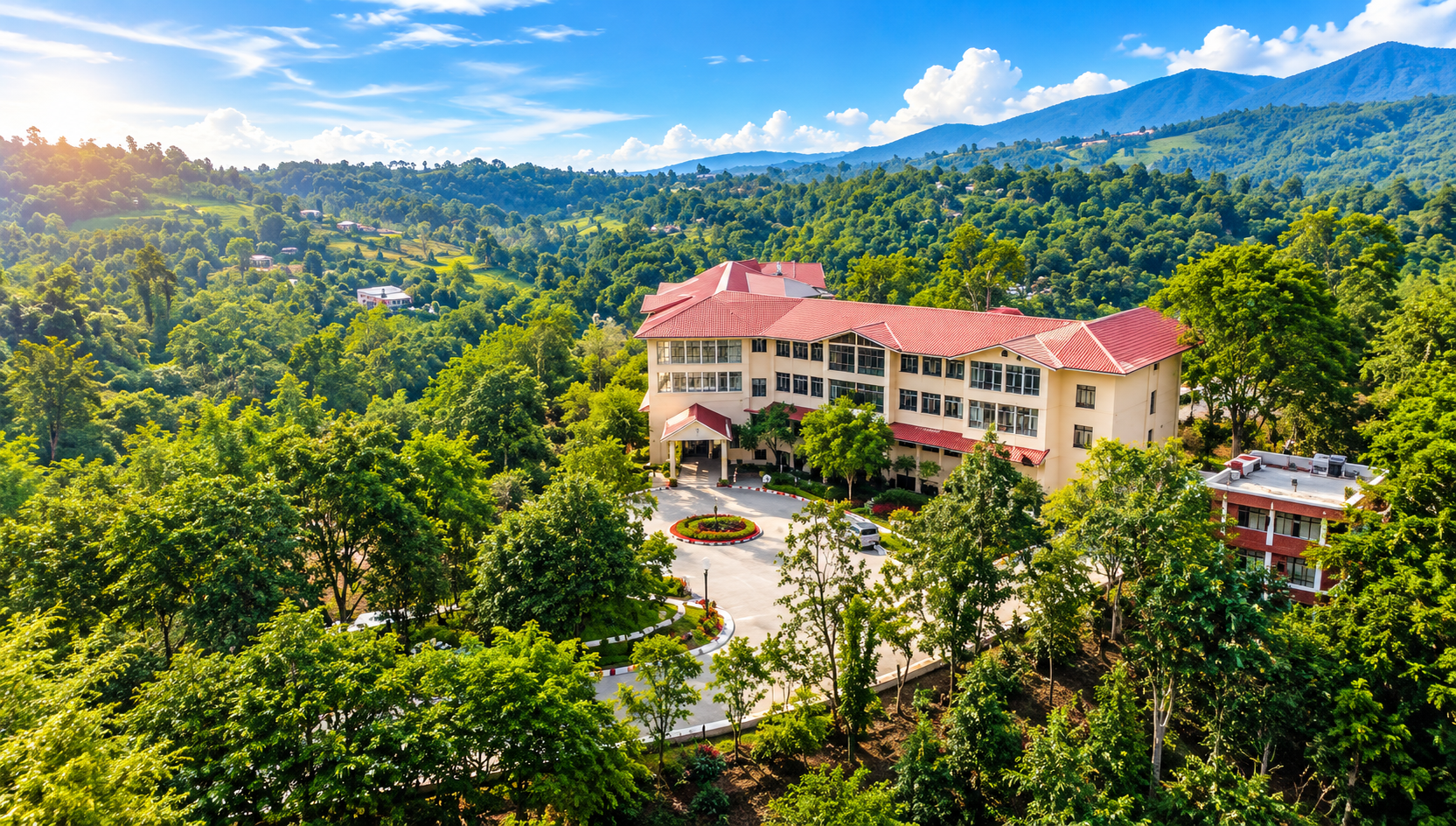
At SGA Design Lab, we translate sustainable design principles into measurable outcomes through institutional campus efficiency, smart water management systems and integrated infrastructure planning. Our approach combines low-volume water fixtures, efficient distribution networks and water reuse and recycling systems to achieve approximately 30–35% water savings and 30–35% reductions in water-related capital costs. Our campus planning approach also considers campus water security and water infrastructure efficiency. The IIT Guwahati reference demonstrates a potential water capacity of 500 million+ litres, comprising 350 million and 150 million litre components. At IIT Tirupati, integrated water collection and lake systems demonstrate a pathway towards 100 million litres of water capacity, enhanced from an initial 80 million litres, with approximately six months of water requirements addressed through the system.
Our energy strategies focus on building energy management systems, improved energy performance index (EPI) and renewable energy performance. Through passive planning, natural daylighting, efficient building services and solar integration, our projects demonstrate the potential for approximately 30% electrical load reduction and 40% energy savings. We also recognise the role of grid-interactive buildings in improving energy management and reducing peak electricity demand. By incorporating resource performance monitoring into our approach, we aim to improve operational efficiency, conserve resources and create more responsible institutional and residential developments.