
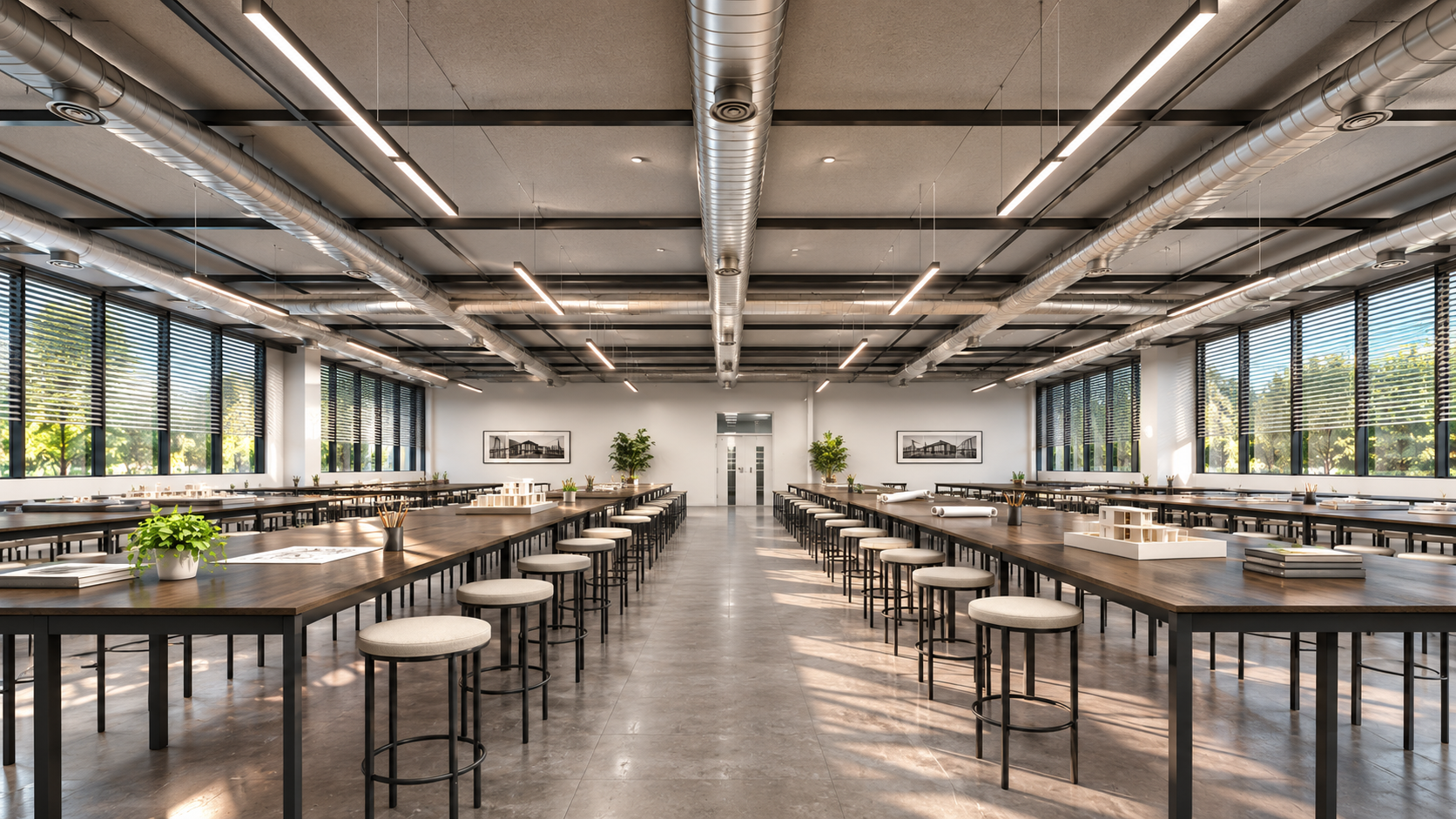
The Laboratory Interiors project explores the design of contemporary research and scientific environments that bring together functionality, precision and architectural expression. The interiors are envisioned to support experimentation, investigation and knowledge development through carefully planned spaces that respond to the operational requirements of modern laboratories.
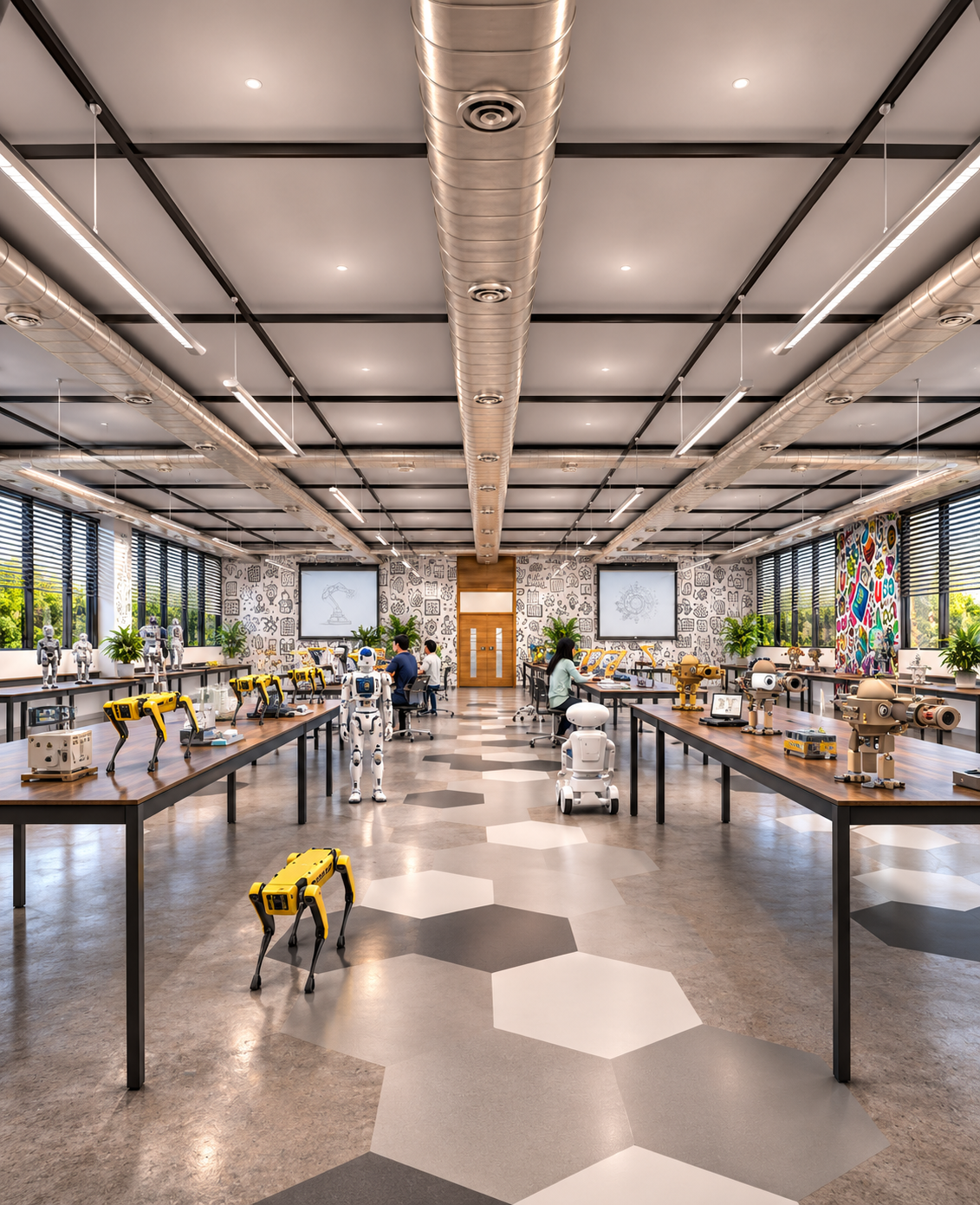
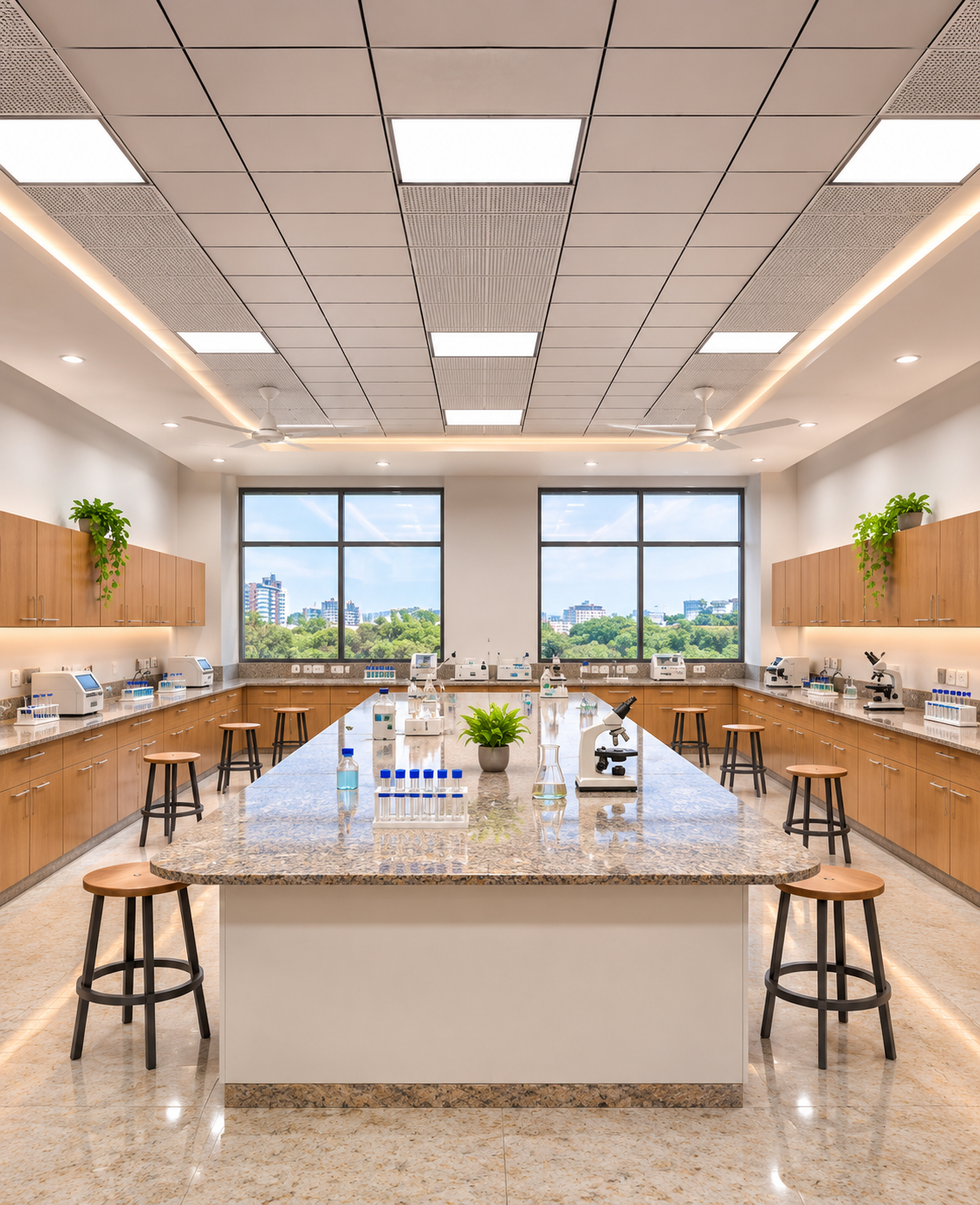
Laboratory spaces are organised to support distinct research activities, equipment requirements and movement patterns. Workstations, laboratory benches, storage areas and supporting facilities are arranged to establish efficient workflows and clear circulation.
The planning considers the relationship between research areas, preparation zones and service spaces, helping create an organised environment that supports different scientific and academic functions.
Laboratory interiors require close coordination between architectural planning, building services and specialised equipment. Provisions for electrical systems, water supply, drainage, ventilation and laboratory utilities are considered as part of an integrated design approach.
The coordination of these elements supports functional performance while allowing laboratory spaces to respond to their specific research and operational requirements.
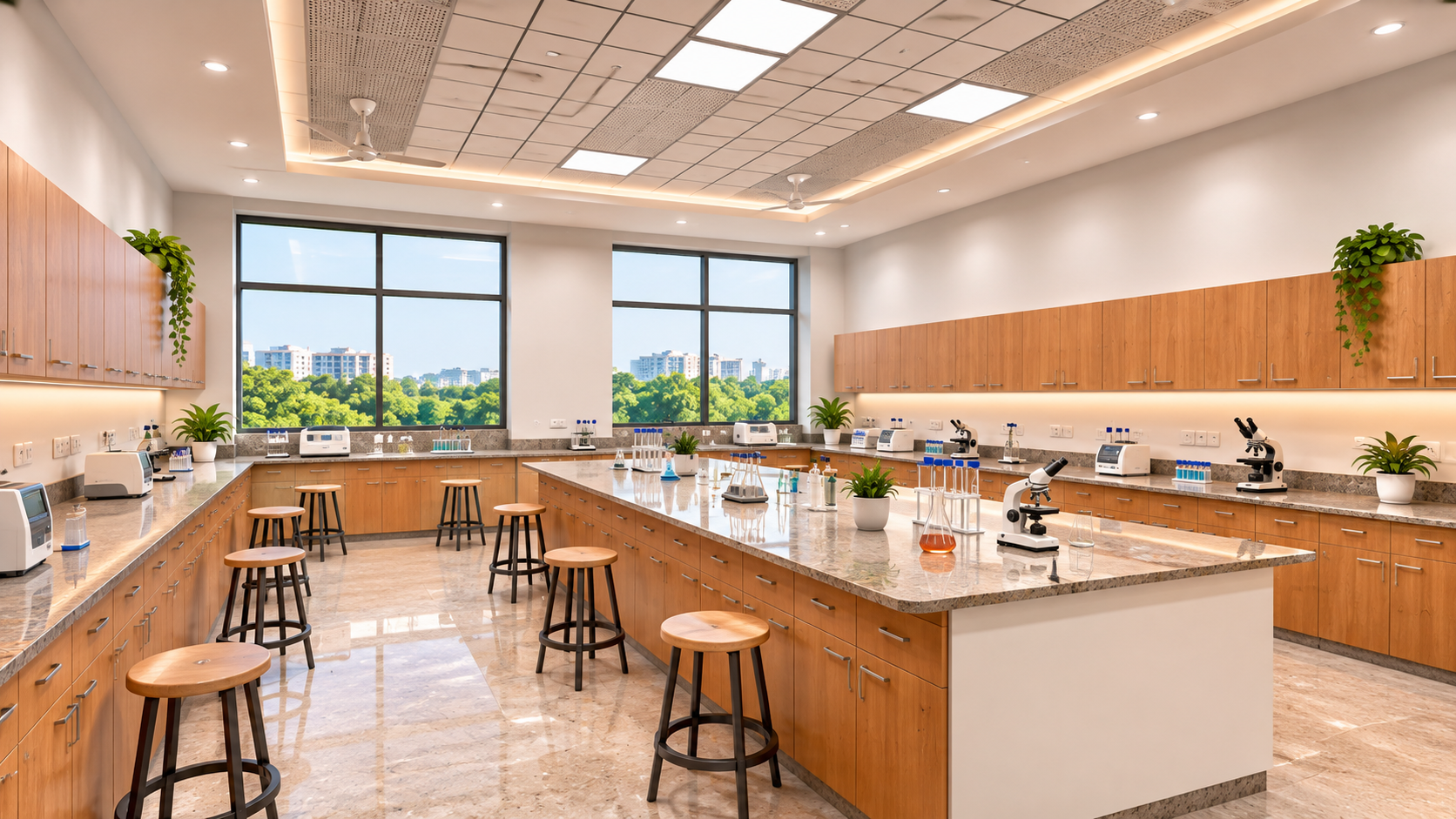
Material selection plays an important role in the performance and longevity of laboratory environments. Finishes and surfaces are considered in relation to durability, ease of cleaning, maintenance requirements and the activities carried out within each space.
A coordinated approach to flooring, wall finishes, work surfaces and storage systems creates a practical and cohesive interior environment suited to intensive institutional use.
Appropriate lighting and environmental considerations contribute to a comfortable and effective research setting. Task lighting, ambient illumination and carefully planned spatial arrangements support visibility and day-to-day laboratory activities.
The design approach also considers circulation, accessibility and the coordination of relevant safety provisions in accordance with the specific laboratory function and applicable requirements.