


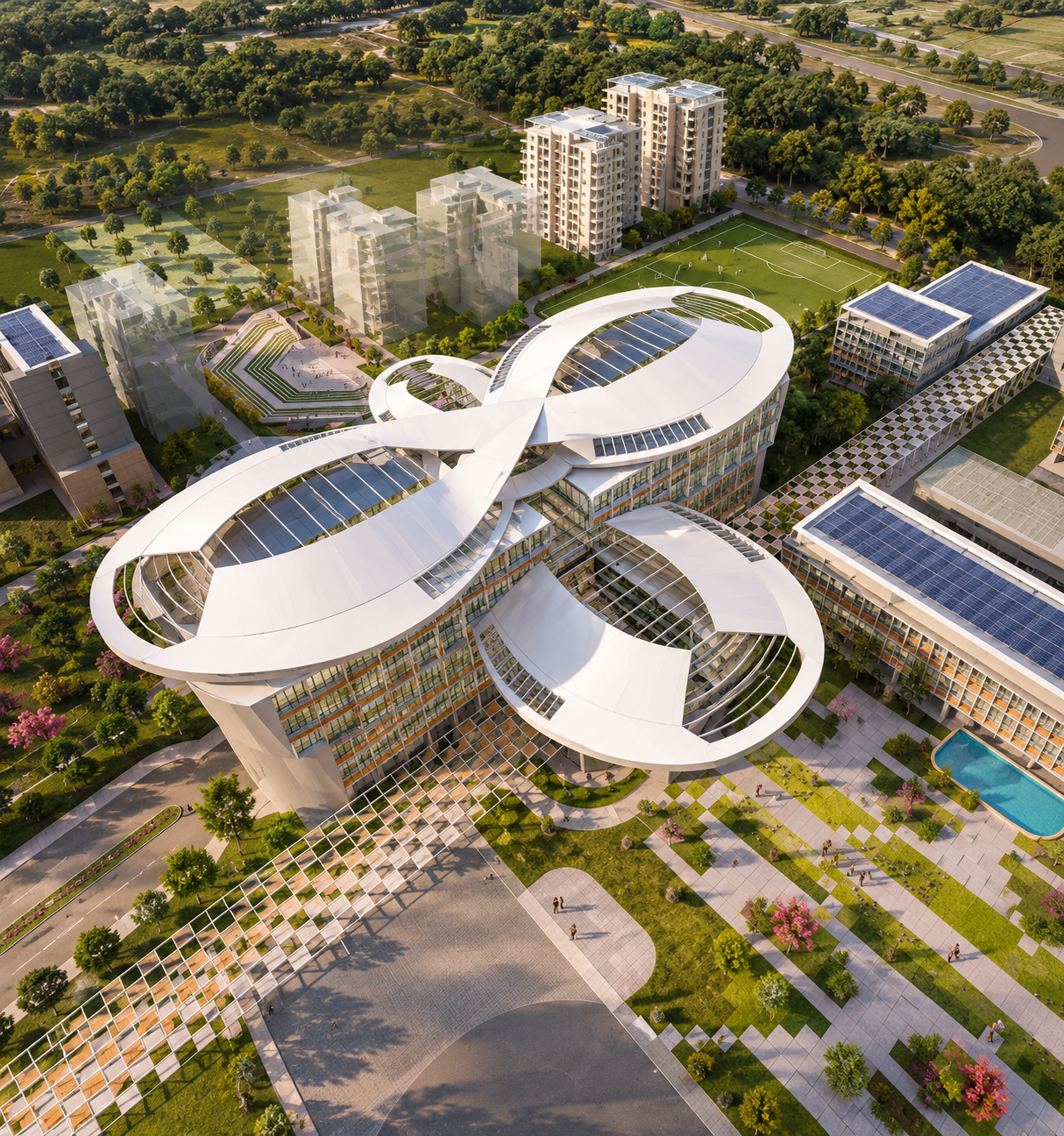
The campus is planned around compact clusters that bring together related institutional functions. This approach creates a structured arrangement of buildings and facilities, supporting functional relationships between different academic and administrative departments.
The compact planning strategy aims to establish a connected institutional environment while making efficient use of the available campus area.
Phased development is an important component of the campus masterplan. The planning framework allows the university to develop progressively while maintaining a coordinated overall campus vision.
Future facilities are considered as part of the initial masterplanning process, helping establish appropriate locations and relationships between present and proposed development. This approach provides flexibility for institutional growth while supporting continuity in campus organisation.

Microclimate and environmental conditions are incorporated into the masterplanning approach to optimise the relationship between the campus and its surroundings. The planning considers the influence of environmental conditions on the arrangement of buildings, open spaces and circulation networks.
This approach aims to create a campus environment that responds to its context while supporting the overall sustainability objectives of the university.
SGA Design Lab
Acres of Campus
Built-up Area in Sq.mt
Green Building Target
Campus Planning Capacity
Construction status
Sustainability is a central consideration in the Gujarat Biotechnology University masterplan. The development is planned with a target of compliance with a 4-Star GRIHA rating, guiding the approach towards environmentally responsible campus development.
The integration of infrastructure, phased development and microclimate considerations contributes to a coordinated sustainability framework for the institution.