
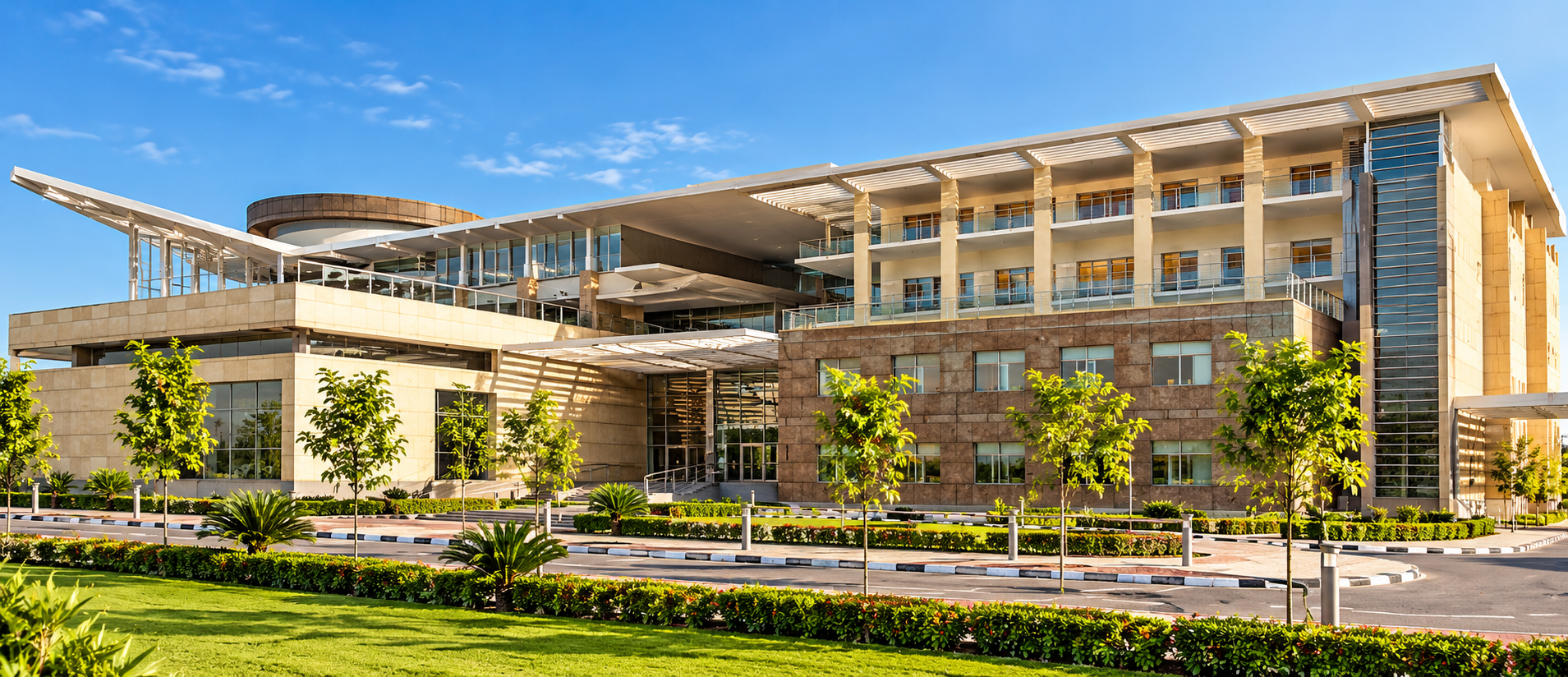
The Indian Institute of Technology Sonipat project is envisioned as a Technopark development focused on research, innovation and product development. The facility is planned as a collaborative environment where IIT Delhi, industry partners and government agencies can work together to develop advanced technological solutions.With a site area of 10 acres and a built-up area of 40,000 sq. m., the project establishes an institutional setting designed to support technological collaboration, research activities and associated services.
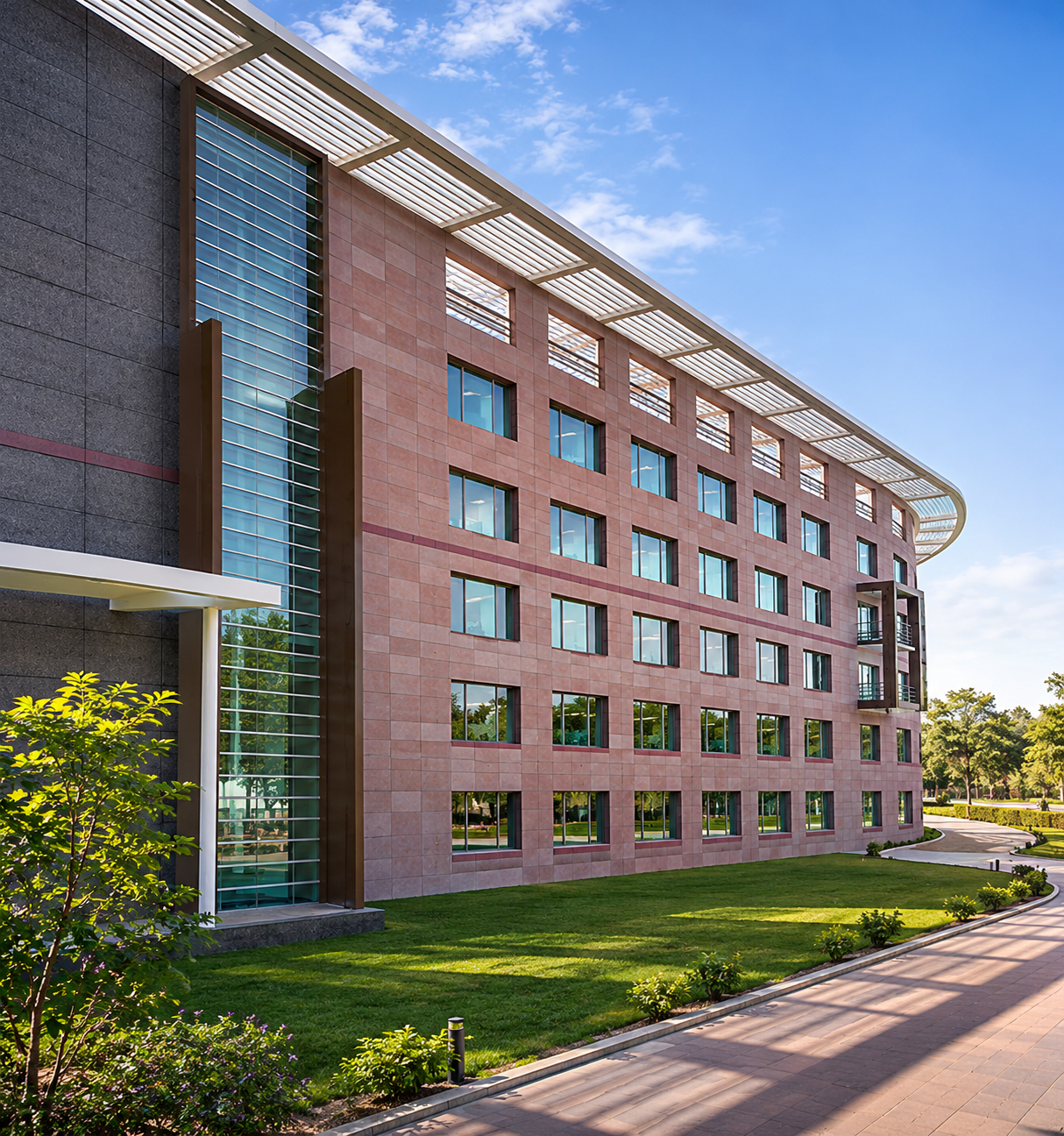
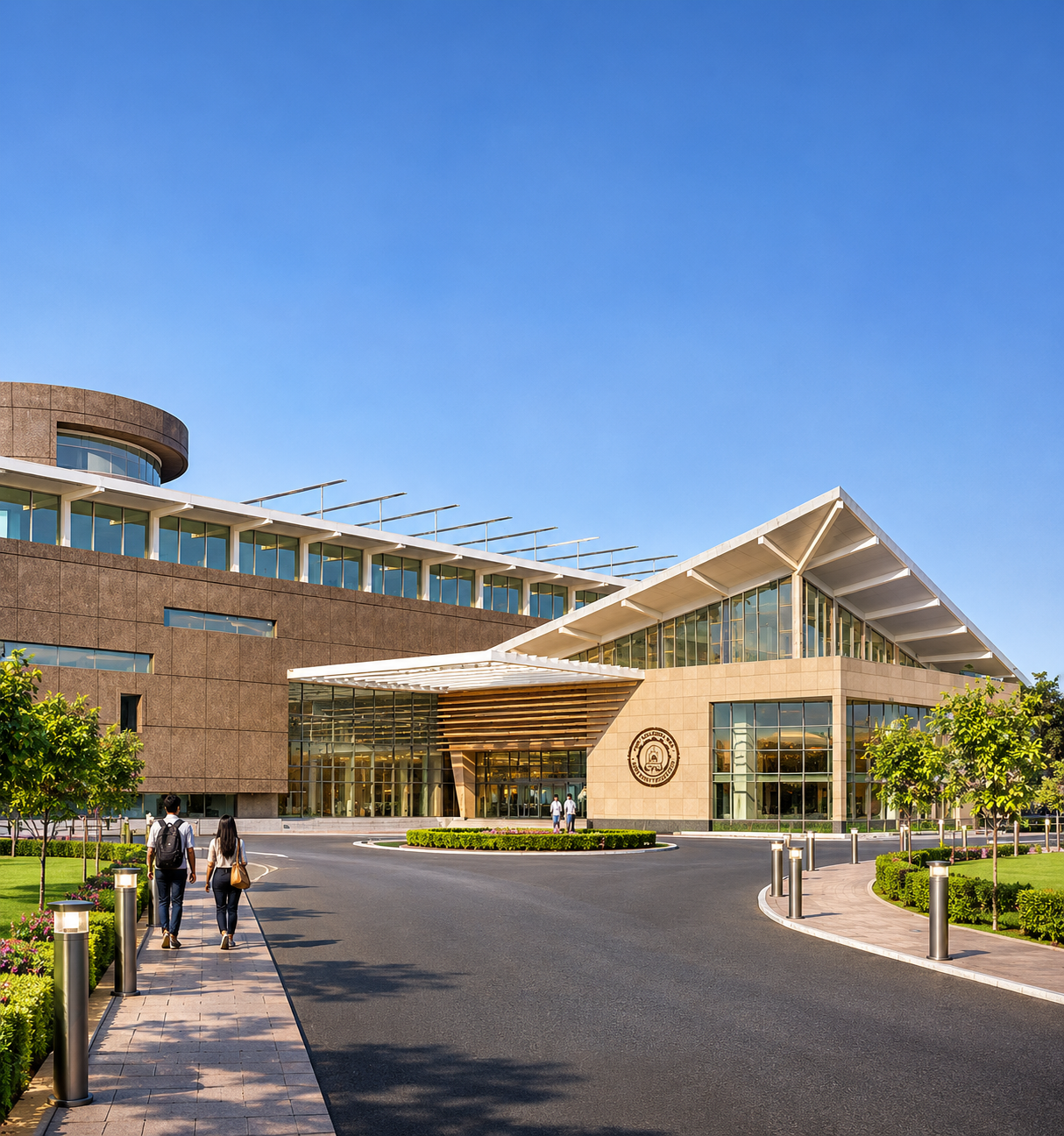
The Technopark is planned as a research-oriented facility that encourages interaction between academic institutions, industry and government agencies. Its primary focus is to support research, innovation and product development through an environment that facilitates collaboration and the development of advanced technological solutions.
The planning brings together spaces and facilities intended to support research activities, professional interaction and technology-led development.
The Technopark is supported by a range of shared resources and service facilities intended to address the operational needs of its users. The planned supporting infrastructure includes technical and commercial service providers, utility services, restaurants, banks, convention facilities, parking, security, reception and internal transportation.
These facilities are complemented by recreation and sports provisions, contributing to a more comprehensive institutional environment.
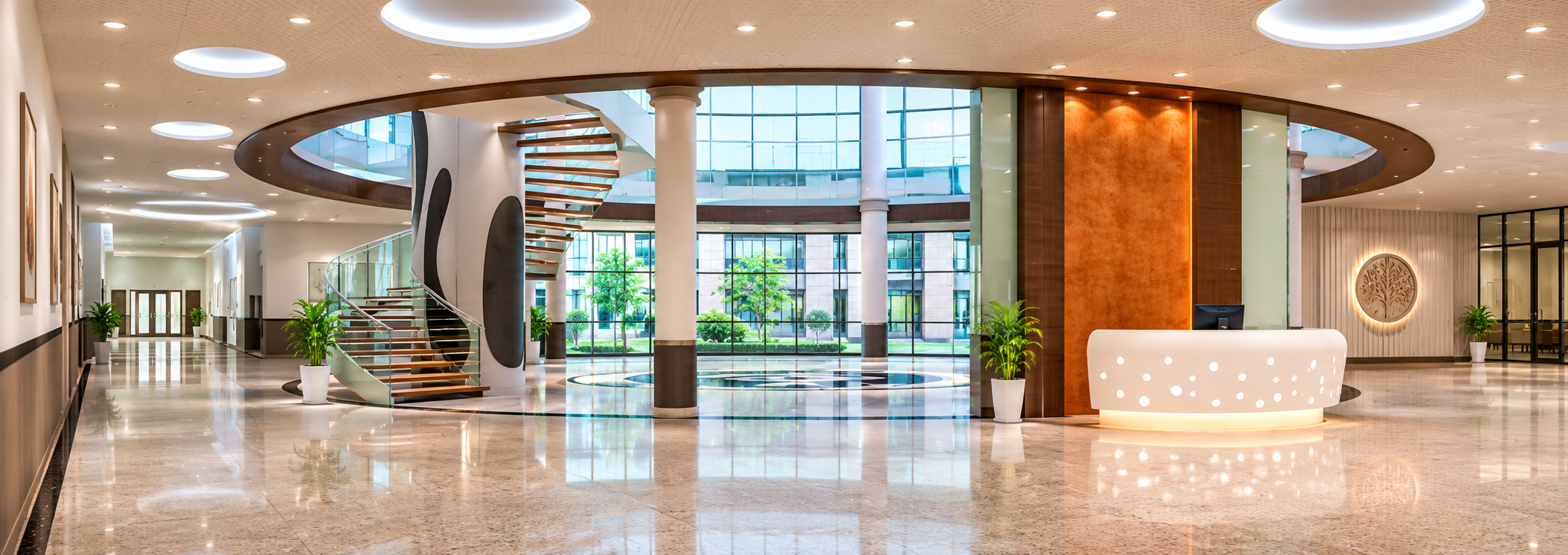
The site plan illustrates the relationship between the proposed development, internal circulation and landscaped areas. The organisation of the site considers the placement of the built form alongside outdoor spaces and supporting infrastructure.
The landscape framework contributes to the overall site environment, while the planned circulation and spatial arrangement support the functional requirements of the development.
SGA Design Lab
Acres of Campus
Sq. m. Built-up Area
Green Building Rating
Students – Planning Capacity
Construction status
Sustainability forms part of the project's institutional development approach. The project has obtained a 3-Star GRIHA Rating, recognising its green-building performance under the GRIHA assessment framework.
The development brings together research-oriented infrastructure, supporting facilities and green-building considerations within a coordinated institutional project.